Diagnose Before You Pitch: A Discovery Call That Feels Like Coaching
The diagnosis layer on top of the 15-minute skeleton. Cost of stuck, what they tried, how they decide.


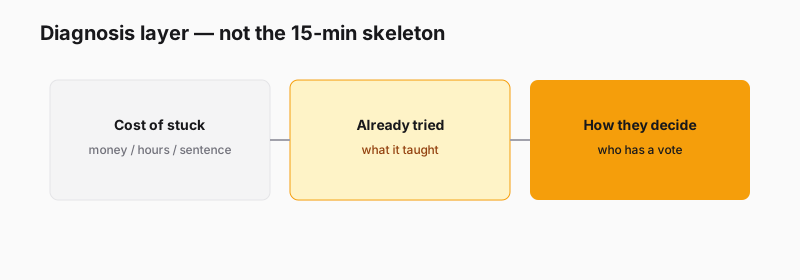
This is not the 15-minute skeleton in the discovery call script. That post owns connect / diagnose / enroll. Keep it. This post is the diagnosis layer: cost of staying stuck, what they already tried, and how a yes actually gets decided. If you skip this layer, you enroll misfits and then invent a capacity problem.
Say it in the first minute:
“I’m going to diagnose before I talk about working together. If we’re not a fit, I’ll say so.”
Then do it. Reflect. Don’t perform.
| Layer | Skeleton (already written) | Diagnosis (this post) |
|---|---|---|
| Connect | “What made you book?” | What happens if nothing changes in 90 days — in money, time, or identity |
| Diagnose | Problem, cost, what they tried | Specific failed attempts + what they learned + who else has a vote |
| Enroll | Name the gap, ask | Offer only if the decision process can say yes this month |
Why the Skeleton Alone Fails
The skeleton is enough to stop a ramble. It is not enough to see whether they can buy. Coaches hear a pain story, feel useful, and pitch. Then “I need to think about it” is a surprise. It isn’t. You never asked how a yes happens.
The fix: three extra questions, asked before any package name. First clients still need these. So do people who already like you.
Cost of Stuck (not “how does that feel”)
“If this is unchanged on December 1, what did it cost you — in dollars, hours, or a sentence you don’t want to say about yourself?”
Make them pick a unit. Fog cost is how you get fog yeses. Pricing only works if they can see a cost larger than the fee.
If they cannot name a cost, you do not have a buyer. You have a conversation. That’s allowed. It is not an enroll.
What They Already Tried
“What have you already thrown at this? What did each attempt teach you?”
List them. If the list is “I thought about it,” they are not in the market. If the list is three courses and a coach who “didn’t get me,” ask what “get me” meant. You are listening for a pattern you cannot serve — or one you can.
Do not trash the last coach. Diagnose the miss.
How a Yes Gets Decided
“When you’ve said yes to something this size, who else was in the room? What did you need to see?”
If a partner, a calendar, or a January start is the real decider, the enroll question in the skeleton will bounce. Name the process. Offer a next step that matches it: a second call with the partner, a date, or a clean no.
The Extra Ten Minutes
Keep connect at two. Spend ten in this layer. Enroll in three only if the layer produced a cost, a failed attempt, and a path to yes. If it didn’t, the close is:
“I don’t think we should start. Here’s why. Here’s who I’d send you to.”
That is coaching. It is also how you stop filling September with people who will ghost in week 3.
What Most Coaches Get Wrong
They treat diagnosis as rapport. Rapport is cheap. Diagnosis is a list. They also pitch mid-layer because the pain sounded expensive. Pain without a decision process is still a no.
They copy the skeleton’s enroll line and add a slide deck. The deck is not diagnosis.
A Worked Call
They booked because “visibility.” Cost of stuck: no paid conversations in 90 days, 6 hours a week rewriting a page nobody sees, the sentence “I’m not a real coach.” Tried: a $199 challenge, a VA who posted quotes, a previous coach who built a content calendar. Decision: partner sees any fee over $2,000; they need a yes this month because September cohort dates are fixed.
You do not pitch a visibility package. You name the gap: paid conversations, not posts. You ask if the partner can be on a 15-minute call Thursday. If not, you do not enroll. That is diagnosis.
If the cost had been fog (“I just want to feel confident”), you would have ended at “not this season.” Confidence is not a unit.
Scripts for the Three Extra Questions
Cost: “Pick a unit — dollars, hours, or a sentence. If nothing changes by [date], what’s the unit?” Tried: “Make me a list. What did each attempt teach you that the next one has to respect?” Decide: “Who can veto this? What would they need to see? What’s the latest date a yes is still a yes?”
Write the answers where you can see them. If you cannot repeat the unit, the list, and the veto, you are not ready to enroll.
When DIY Isn’t Enough
When every call still ends in a fog maybe, the problem is not your charm. It’s that nothing captures cost / tried / decision so you repeat yourself. Launch, Grow, and Scale can hold the form and the follow-up. You still have to ask the three questions.
Want a discovery hour that diagnoses before it sells? Let’s talk.